
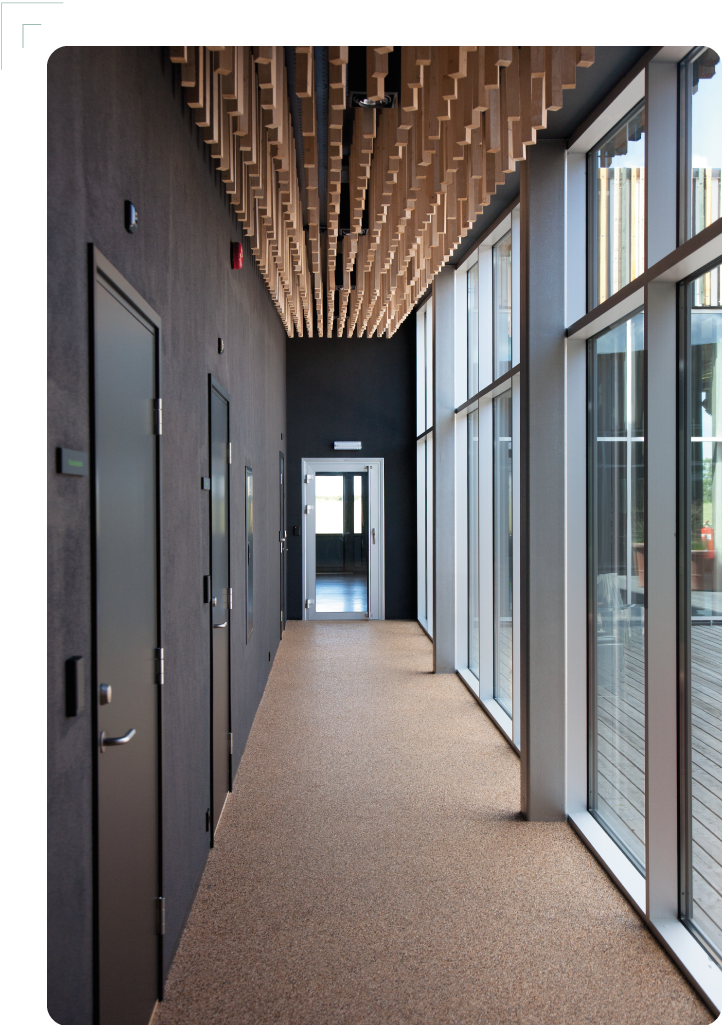
The conversion of industrial buildings to office use has seen a tremendous surge in popularity in the UK in recent years. Warehouses, factories, and light industrial units can provide features increasingly sought after in contemporary office space designs including high ceilings, natural light, large floor plates, and character. Nevertheless, any industrial building conversion must undergo a serious reality check due to technical limitations and the challenges of adaptation.
The Advantages of Industrial Buildings
Industrial buildings can provide features difficult to replicate in purpose-built offices. 4 to 6 meters ceiling heights are a plus as it allows the provision of services while still maintaining considerable room height. Huge glass windows which were originally installed to facilitate illumination of manufacturing processes allow plenty of natural light to penetrate into the building interior. Open ceilings, steel beams, brick walls, and concrete floors give an attractive character to the spaces which some organisations desire.
Location is another factor worth taking into consideration. Often industrial buildings can be found on edge-of-centre plots of land where the cost of the land once suited the manufacturing process, but now it attracts tenants for offices who look for affordable rent yet have good accessibility. Such buildings usually have a decent transport infrastructure established for the needs of logistics.
Another feature of industrial buildings which is valuable in offices is spaciousness of floor plates. The large floor plates of 5,000 to 10,000 sq. ft without internal column support make space more flexible when organizing work areas, and therefore it becomes more attractive when implementing activity-based working schemes.
Structural and Technical Challenges
Industrial buildings can pose certain challenges which must be identified and tackled to ensure a viable conversion project. The load-bearing capacity of industrial floors is likely to be higher than needed for an office building, but the type of load is totally different. Whereas the former bears heavy loads concentrated at one point (machinery), the latter requires even distributed loads all over the floor area. Structural assessments will identify the need for costly reinforcement works if they are required.
In terms of thermal performance, the standard for industrial buildings was far lower than the one for offices nowadays. Single glazed metal windows, poor insulation in walls and roofs, and weathertightness as the only requirement made for high heat loss. Bringing thermal performance up to modern standards usually means performing major improvements which cost money.
As far as acoustics are concerned, the characteristics of industrial buildings make them unsuitable for offices in many aspects. Reverberation times caused by hard surfaces, high ceilings, and vast spaces in industrial buildings create conditions which prevent conducting open plan offices without installing additional acoustic measures.
Last but not least, a major challenge for converting an industrial building lies in its building services installations. Typically, there is little electrical capacity provided by industrial buildings, heating is primitive and inefficient, and there is no air conditioning. Modern offices require 25-40 watts per sq. ft of electrical capacity for computers, building automation, lighting and other installations. Installation of a full set of services represents 35-45 percent of the overall cost of the conversion.

Planning and Regulatory Issues
There is no doubt about the fact that any attempt to convert an industrial building into an office will have to deal with various planning and regulatory aspects. Any change of use of a building from B2/B8 (industrial use) to E (office use) is subject to planning permission unless it falls under permitted development rights, the conditions of which are very strict.
Meeting the requirements of building regulations is also quite challenging as it usually calls for major changes to be implemented. Fire safety requirements are drastically different in terms of offices and industrial buildings in terms of compartmentalization, fire resistance of the structural fabric, and installation of detection/suppression devices. Part M (accessibility) imposes level access, accessible toilets and routes around and in the building which is often problematic in case of multilevel buildings.
Conservation aspects are also a key issue for industrial buildings’ conversions as often it is the heritage status of a building which makes it desirable to convert. The necessity to obtain listed building consent or to conduct the works in a conservation area may significantly complicate conversion projects and drive up the costs.
What Makes a Successful Conversion?
Successful conversions share common features determining their feasibility. They are:
- Appropriate ceiling heights (3.5 – 5 meters). Too much height (6 meters +) makes the building unsuitable due to heating and cooling problems and acoustic challenges.
- Natural light from big enough and properly located windows makes an office attractive and less dependent on artificial lighting. Limited window surface or improper orientation may cause serious problems to be solved.
- Sound structural condition not requiring major repairs or renovation.
- Reasonable floor-to-floor height. In case of buildings with mezzanines or other levels, insufficient floor-to-floor height is a disadvantage.
- Suitable location with access to public transport and parking.

In Conclusion
Conversion of industrial buildings into offices may offer real possibilities for achieving outstanding results. It is however essential to understand the reality of such projects and carefully assess them before embarking on them.
If a building requires major structural works, a full installation of a new building services installation and a comprehensive thermal performance upgrade, it is unlikely to be feasible compared to purpose-built premises. If it has good bones, sufficient building services installation, and reasonable thermal performance, then it could serve a good office building.